


28. Aug. 2019
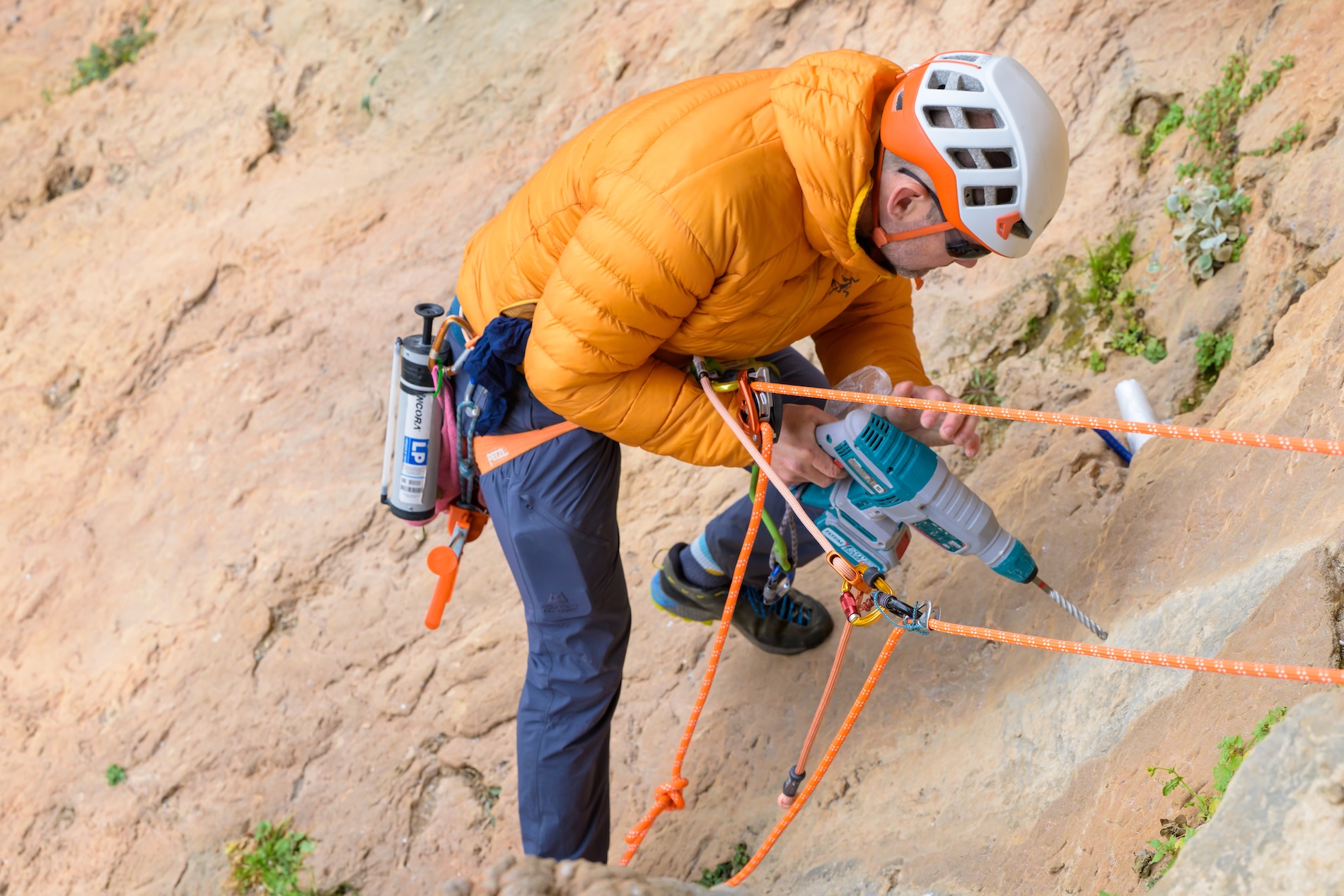
Kalymnos with its dramatic, photogenic limestone walls, steep tufas and amazing climbing culture is a veritable climbing paradise. Yet the island’s exposure conditions are highly aggressive, and some sectors effectively behave as their own microclimates. As a result, aging bolts, stress corrosion cracking and route safety have become increasingly important issues for the local climbing community.
Against this backdrop, local authorities invited the UIAA Safety Commission to Kalymnos in May 2026 to host a bolting workshop as part of its annual safety meetings. The commission, a voluntary body responsible for developing international safety standards for climbing equipment, shared insights from more than a decade of research into bolts, stress corrosion cracking and rebolting practices.
Recent discussions surrounding anchor failures and corrosion have raised urgent questions about long-term route maintenance, materials, environmental exposure and local oversight. The UIAA’s ability to act as a neutral technical voice, bringing together local authorities, bolters, route developers and community representatives, was viewed as an important contribution during a difficult moment.
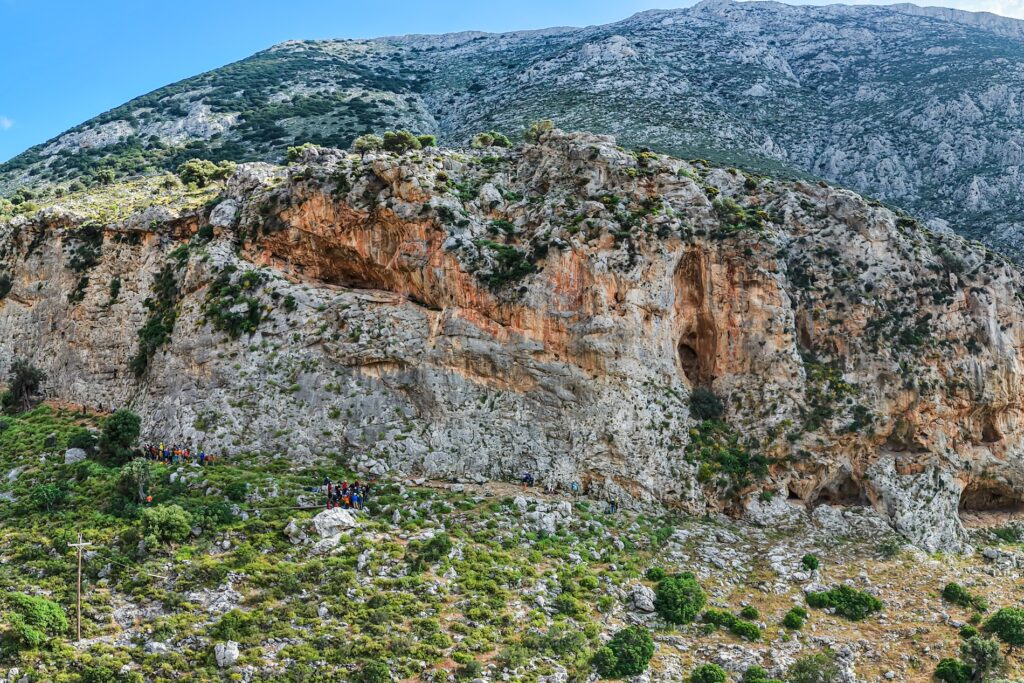
“The bolting challenge in Kalymnos is very big. We have almost 5,000 routes all over the island. About 1,000 of these routes are more than 20 years old and these routes start to have old material and are open to corrosion. We have to prioritise rebolting these 1,000 routes. The UIAA meeting in Kalymnos is crucial as it is a critical for the island as we move from stainless steel to a better material for longer-term sustainability”, says Aris Theodoropoulos of Rebolt Kalymnos.
Aris Theodoropoulos is a Greek mountain guide, climbing instructor, vertical access trainer and long-time advocate for climbing on Kalymnos. He is the author of multiple Kalymnos and Greece climbing guidebooks, as well as several climbing and mountaineering manuals.
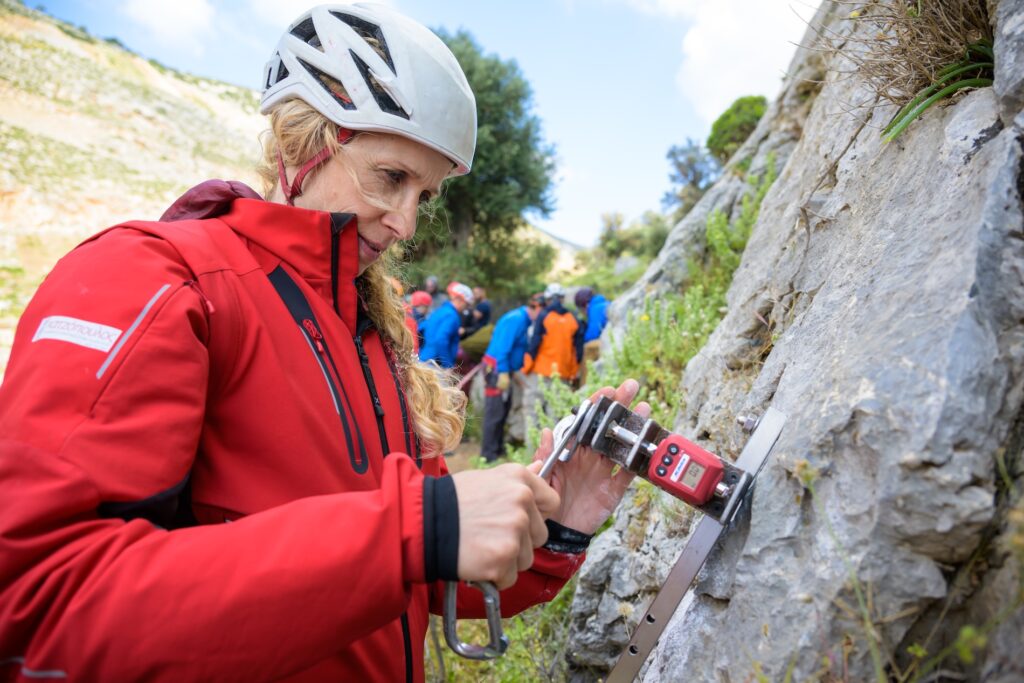
Ahead of the bolting workshop, members of the UIAA Safety Commission carried out two days of crag inspections across Kalymnos. Their work included pull testing, visual inspections and observations related to corrosion and anchor materials.
SafeCom examined a wide range of hardware:
One finding was already clear: corrosion is highly complex and deeply dependent on local environmental conditions (among others such as bolt style, alloy, and manufacturing quality). Wind exposure, air quality, humidity, sun, shade and rock composition all influence long-term bolt performance.
In some cases, anchors failed at very low loads due to rock quality or placement conditions.
UIAA experts have increasingly observed that poor bolt placement is another major issue. In some cases, anchors failed at very low loads due to rock quality or placement conditions. This issue is perhaps less widely discussed than those related to corrosion. While many discussions focus heavily on the material component, but installation technique, assessment of rock quality and long-term route management may be equally critical. Findings from the crag inspections in Kalymnos are currently being analysed. The UIAA report will be published once the laboratory analysis of all collected samples has been completed.
The Rebolting Workshop itself was considered a major success. It welcomed approximately 40 participants, from more than 80 applications received. The format of the workshop included a theoretical session on various types of corrosions, ethics, anchor selection, the evolution of UIAA Standard 123 and related topics and practical sessions on the crags. The programme was designed with elements for both beginners and experienced bolters. Sessions around bolt removal techniques were particularly valuable for many participants.
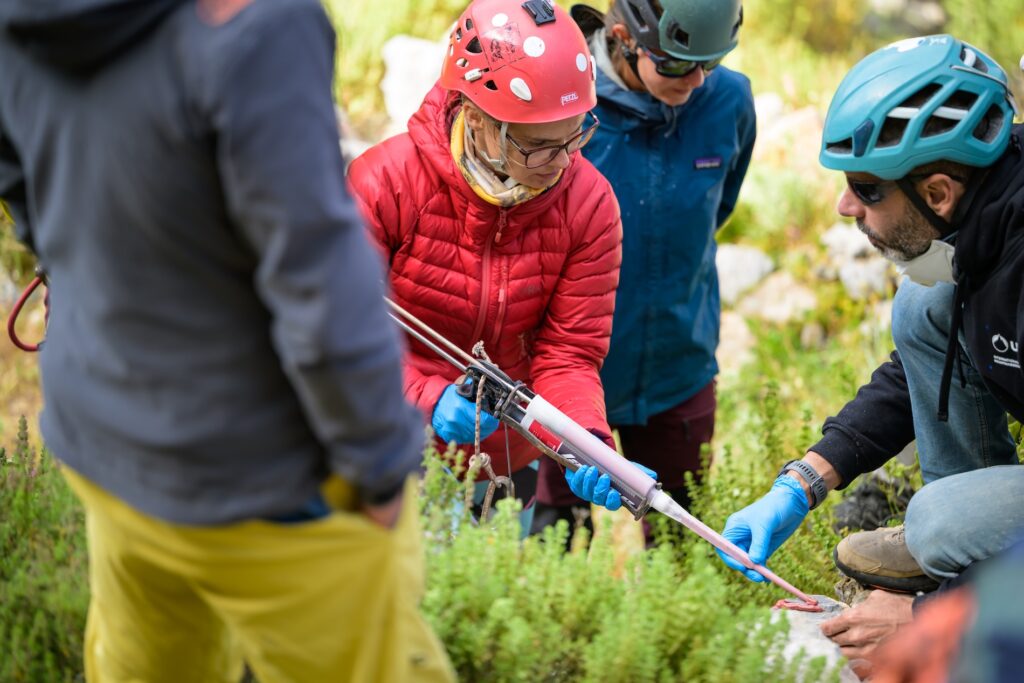
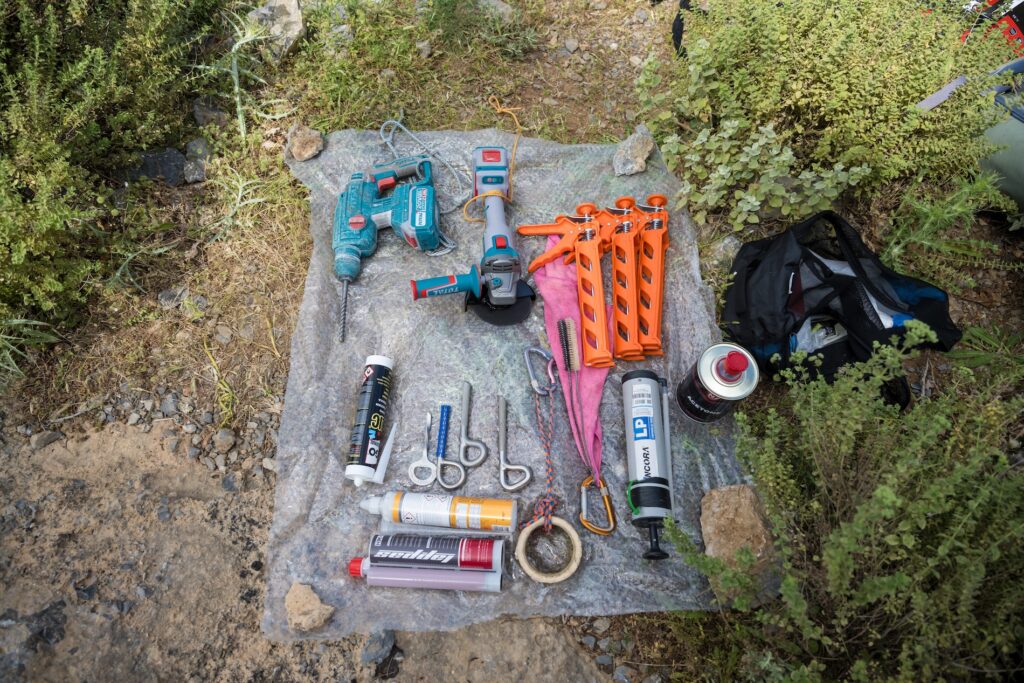
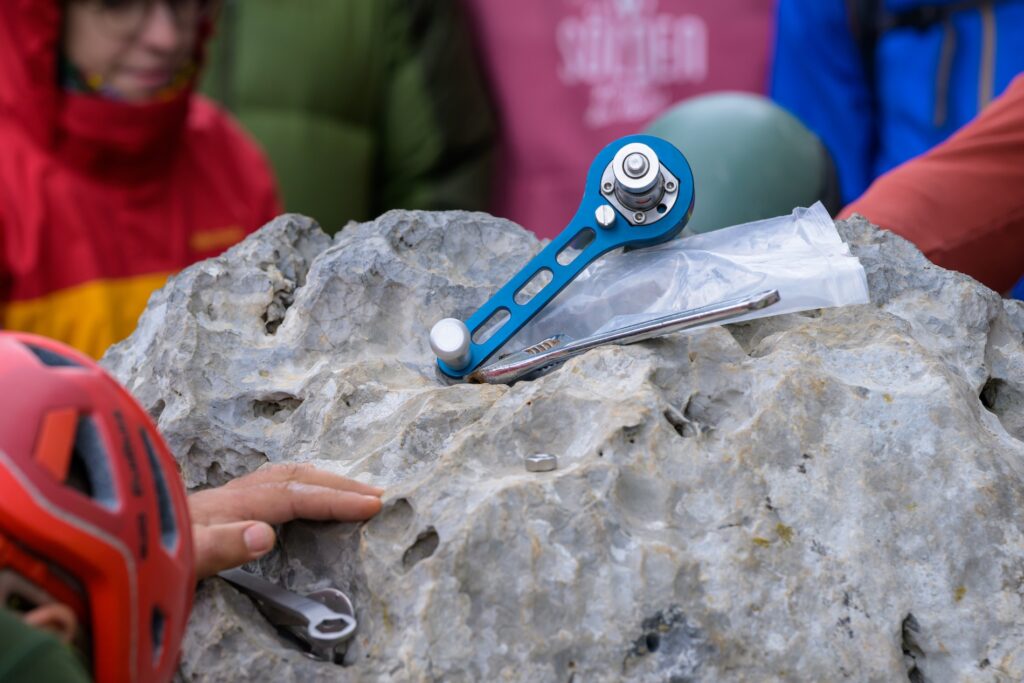
UIAA delegate Fred Campos (Brazil, CBME), led a session which addressed key points from UIAA Standard 123 and the major safety improvements introduced in recent updates. He focused on how the UIAA Safety Label guarantees compliance with rigorous testing requirements that go beyond existing EN standards, covering mechanical strength, corrosion resistance, welding integrity, material traceability and quality assurance.
Campos highlighted the growing understanding of atmospherically induced stress corrosion cracking (AISCC), which became a key driver behind the revision of UIAA 123 version 4. Research and laboratory testing demonstrated that common stainless steels such as 304(L) and 316(L) can still suffer dangerous cracking under certain environmental conditions, especially when chloride salts and humidity combine. The updated standard therefore introduced corrosion classes and accelerated laboratory testing to simulate years of environmental exposure.
In harsh environments, even common stainless steels can crack and fail.
How anchors need to be treated as complete systems rather than simply selecting a corrosion-resistant material was a significant message relayed. Production quality, welding procedures, manufacturing and installation stress, and material traceability all influence long-term durability. Version 5 of the UIAA Standard strengthened requirements for welding quality control and material certification, reflecting lessons learned from field failures and recalls. Campos, one of the key members of the SafeCom working group on this topic, closed by reinforcing that anchor selection must be evidence-based, conservative and adapted to local environmental conditions in order to ensure long-term climber safety.
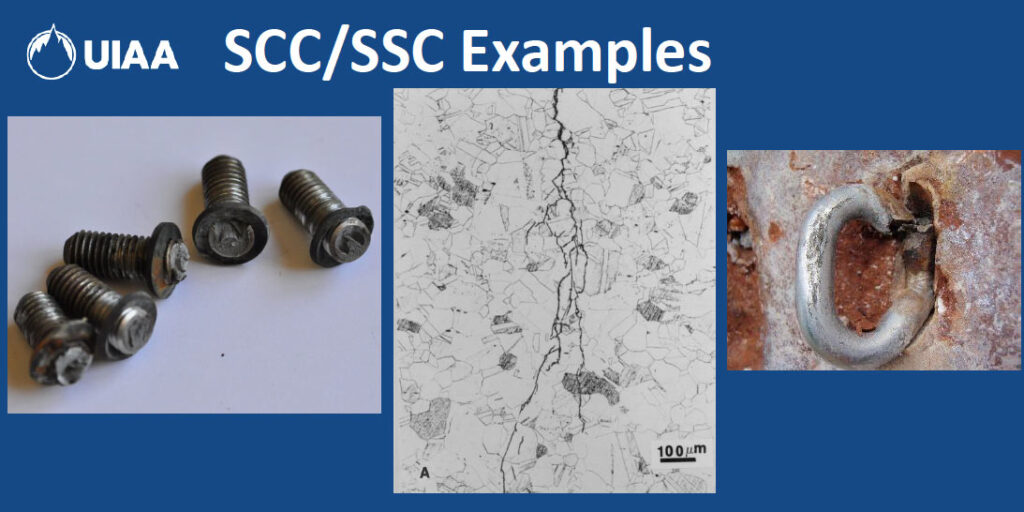
Stephen Gladieux (United States, AAC) introduced corrosion in rock anchors, exploring the technical and environmental factors that affect the safety and longevity of climbing anchors. Different forms of corrosion are examined by the UIAA, including general corrosion, galvanic corrosion, pitting, crevice corrosion and the particularly dangerous stress corrosion cracking (SCC) and sulfur stress cracking (SSC).
Anchor safety also begins in the factory, not just at the crag.
He emphasised how the style of anchor (i.e. the nature of how it is intended to function) is a huge player in determining susceptibility to different forms of corrosion. All anchors have some level of residual stresses from manufacturing, but some anchor styles intentionally create larger tensile stresses in the shaft that exist from installation until the end of the bolt’s life. The thermal history of the anchor, from raw material, to heat treatment, to welding can be an enormous influence as well.
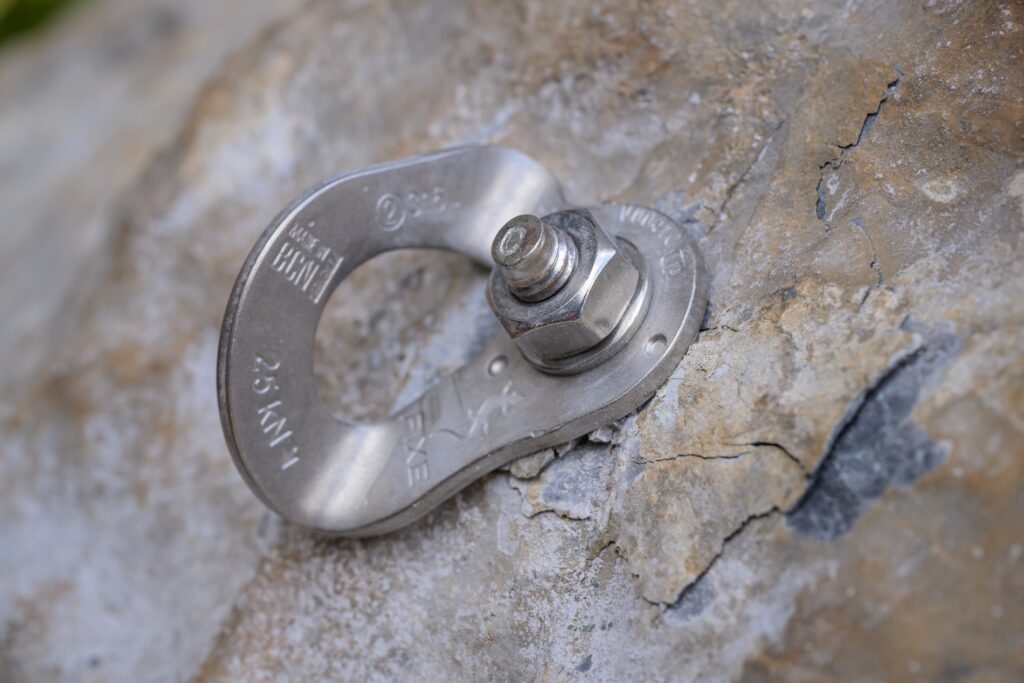
Stephen also highlighted how a relatively small amount of corrosion in the back of the hole can prevent the anchor from functioning as designed. An example of this is where corrosion between the collar and the wedge on a wedge bolt creates more friction than there is between the collar and the rock. This scenario prevents follow-up expansion, and can lead to dangerously weak bolts in steep placements that can be difficult to recognize. Any corrosion on an anchor means it is not the correct choice for the area long term.
Anchor failure is often linked not only to the material itself, but also to environmental conditions and installation methods. Moisture, chloride salts, sulfur sources and poor washing conditions can accelerate deterioration, especially in coastal or humid climbing areas. This presentation highlighted how hidden corrosion can develop beneath hangers, inside pits or in resin-sealed areas, making inspection challenging. The presentation also outlined mitigation strategies, including careful material selection, use of higher-grade stainless steels or titanium, regular inspection programmes and detailed record keeping of anchor installations and replacement cycles.
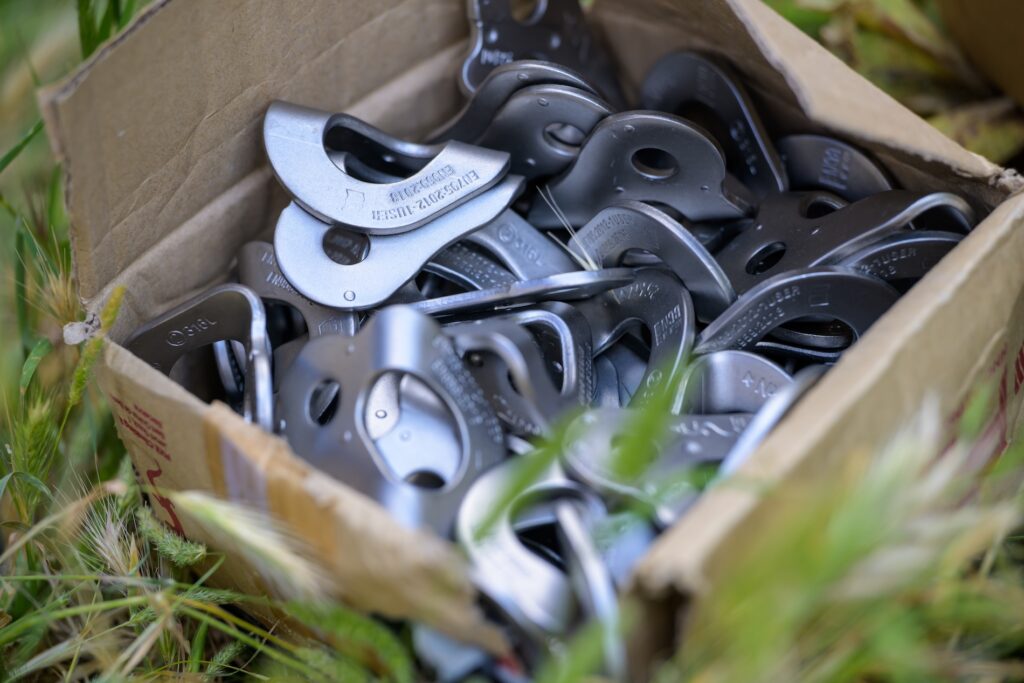
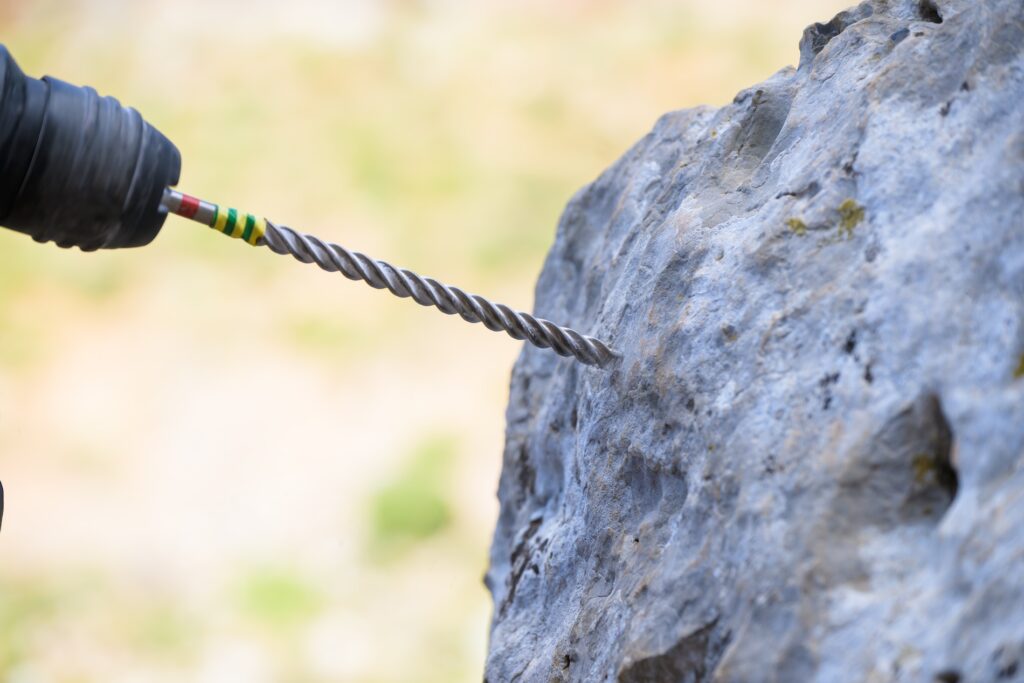
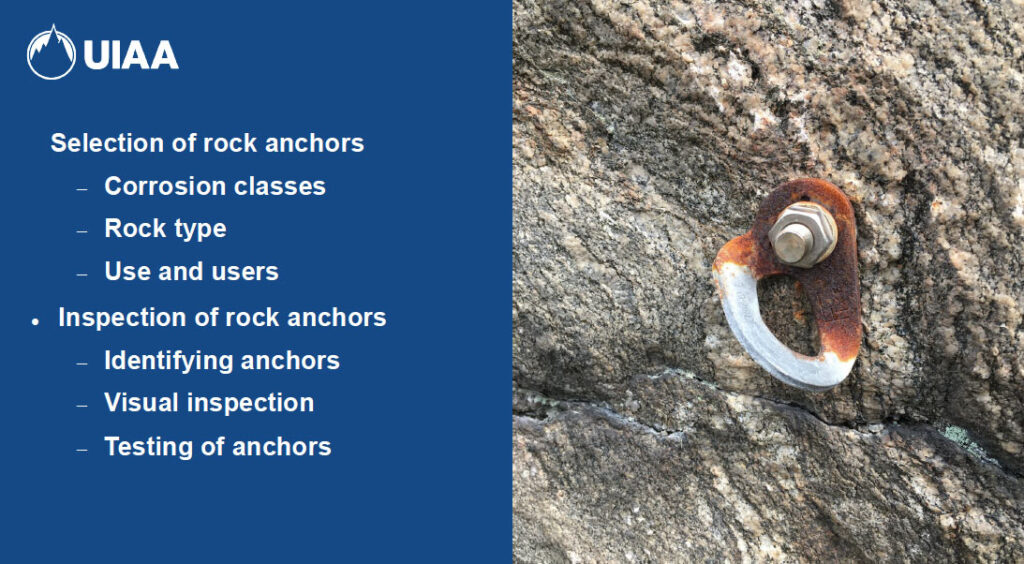
Per Forsberg (Sweden, SKF) explained the framework for selecting, inspecting and maintaining rock anchors in climbing environments. He used the previous day’s inspection on Kalymnos as a case study. Forsberg emphasised that anchor safety depends on understanding corrosion risk, rock quality, environmental exposure and patterns of use. The UIAA corrosion classification system can help route developers and rebolting teams assess appropriate materials and identify areas at risk from general corrosion or stress corrosion cracking (SCC).
Forsberg highlighted how older 304(L) stainless steel anchors should be replaced urgently, while 316(L) anchors require continued monitoring. Factors influencing anchor lifespan include chloride exposure from the sea, rock chemistry, rain washing, temperature, manufacturing stress, installation methods and surface contamination. The presentation also referenced atmospheric corrosivity mapping and stainless-steel selection guidelines to support informed decision-making in different environments.
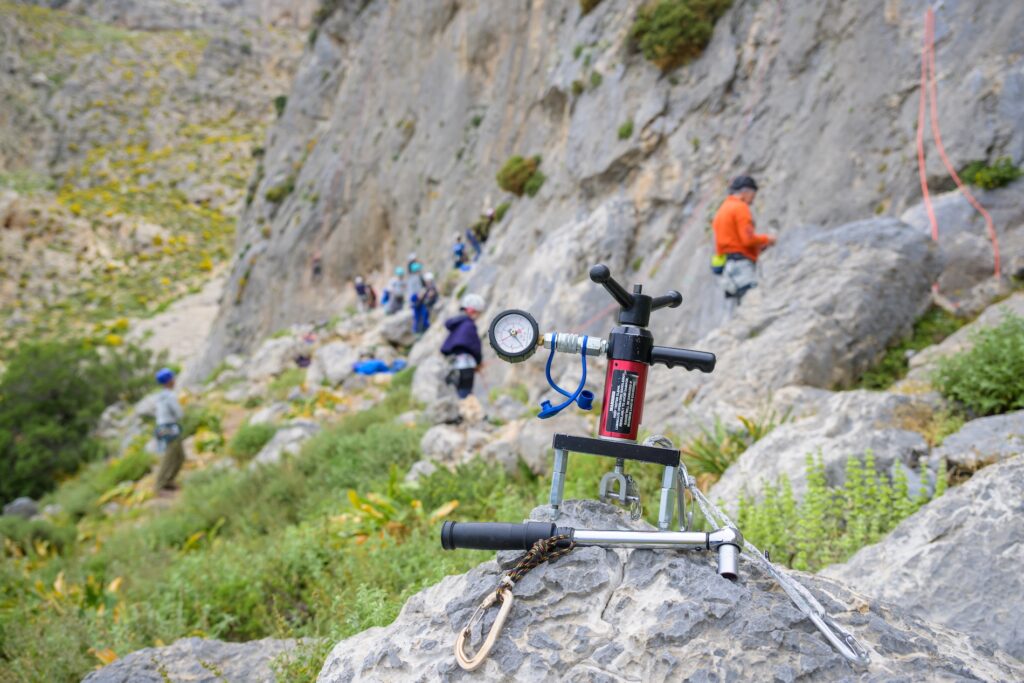
In terms of inspection procedures, the importance of identifying anchor types, installation age and previous warning signs through markings, guidebooks and visual checks were explained in detail. While anchor testing is not considered standard practice, techniques such as pull-out testing (at non-destructive load levels and/or to failure), dye-penetrant testing to screen for cracks on representative samples, and chemical screening (e.g., a molybdenum reagent test to differentiate unmarked, aged 304/A2 from 316/A4 components) can support investigations and long-term monitoring.
The presentation “UIAA Re-Bolting Ethics & Core Tenets” explored the ethical principles guiding the replacement and upgrading of climbing bolts. Marc Beverly (United States) and Stephen Gladieux explained that re-bolting involves balancing modern safety needs with respect for the original character and style of climbing routes. This touched on the ongoing debates between preserving first-ascent ethics and improving accessibility and safety for today’s climbers.
A strong emphasis within this mantra is placed on climbers creating and maintaining their own ethical standards through local consensus, transparency and documentation of changes. Environmental and social responsibilities, including erosion control, wildlife protection and Leave No Trace principles, are also discussed. Responsible “like-for-like” bolt replacement and evidence-based upgrading remain widely accepted best practices within the climbing community.
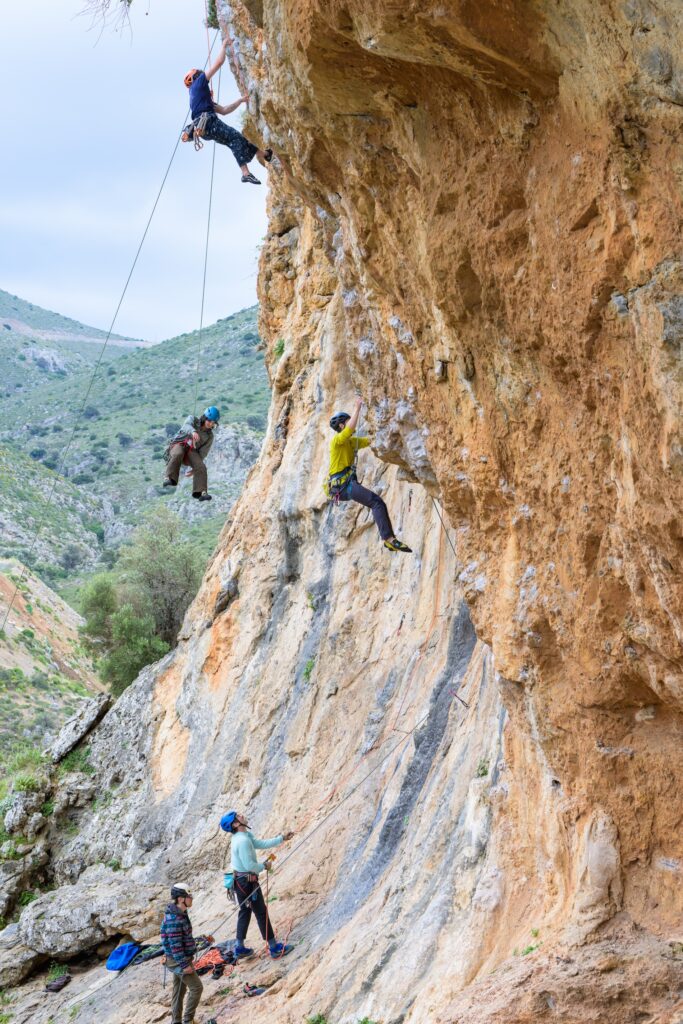
For future events, the UIAA is considering evolving the concept particularly given the challenges of creating workshops accessible for a wide range of experiences. One suggestion was for the UIAA to focus more on “training the trainers” or training experienced bolters who can then transfer knowledge regionally, rather than providing basic training to large numbers of individual bolters.
The UIAA thanks all of those who participated in the event for their important contributions. The event would not have been possible without the support of the Municipality of Kalymnos, the Hellenic Federation of Mountaineering and Climbing, Rebolt Kalymnos, and the UIAA-certified anchor manufacturers who supported the practical sessions. And above all thanks goes to the many dedicated volunteers of the UIAA Safety Commission for leading the workshop and the field sessions.
