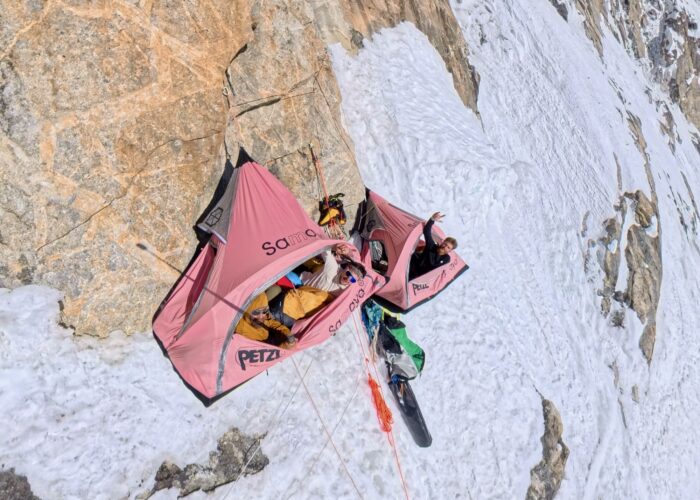
After 13 days on the wall, Siebe Vanhee, Sean Villanueva O'Driscoll and Symon Welfringer made the first ascent of the 1,500 m west face of Tahu Rutum, a remote 6,651-metre peak in Pakistan's Karakoram. But reaching the summit was only part of the story.
Over the past fifteen years, one-handed-tended self-lead belay systems have evolved significantly. Climbers such as Alex Huber, Fabian Buhl, Łukasz Dudek, and Keita Kurakami have pushed the boundaries, achieving lead solo redpoints of 8c and above. Inspired by their accomplishments, Brent Barghahn pursued his own system refinements, combining his background in product design with hands-on experimentation. This journey led to the creation of specialized lead rope solo accessories under his brand, Avant Climbing Innovations, accompanied by his personal milestone — an 8b+ lead solo redpoint completed along the system’s development. With the numerous and ever-changing options shared on the internet, we wanted an article offering a clear, proven method — one that has been used successfully on the rock. We asked Brent to sum up the most important LRS techniques for us. The refined system presented below brings together techniques from these leading climbers and other dedicated innovators.
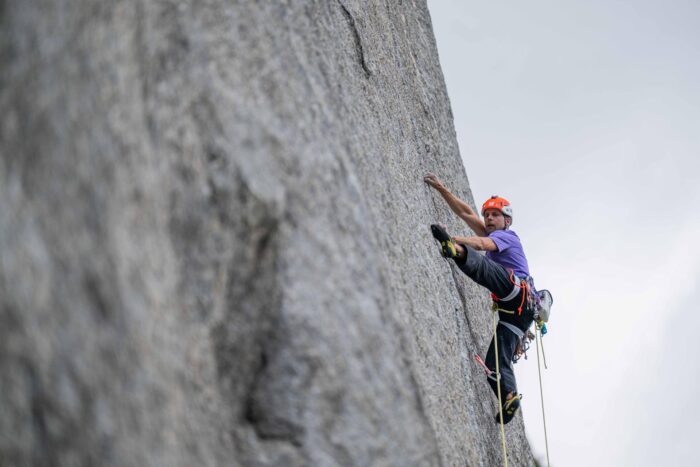
Im Juni dieses Jahres gelang Jonas Schild gemeinsam mit Thomas Schmid eine freie Begehung der Route Joy Division (Variation) am Torrione Qualido im Val di Mello (Italien). Die 800 m hohe Granitwand gehört zu den anspruchsvollsten Big-Wall-Zielen Europas und wird hinsichtlich Ausmaß, Stil und Ernsthaftigkeit nicht selten mit El Capitan verglichen. Schild konnte alle Seillängen sturzfrei klettern, darunter auch zwei Passagen im oberen 8. Franzosengrad.
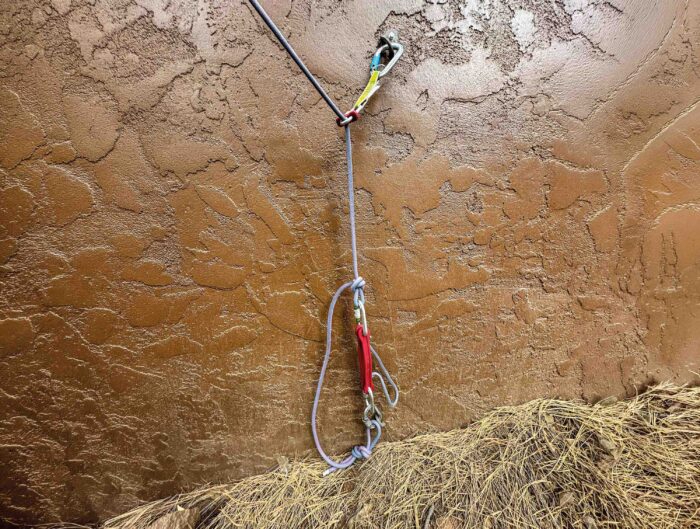
Alpine sport climbing routes are often abseiled. Such routes are often climbed with single ropes. An aid line can be used to retrieve a small haul bag and enables abseiling over the full rope length. Here we explain the problems and questions that frequently arise when abseiling with aid lines.